

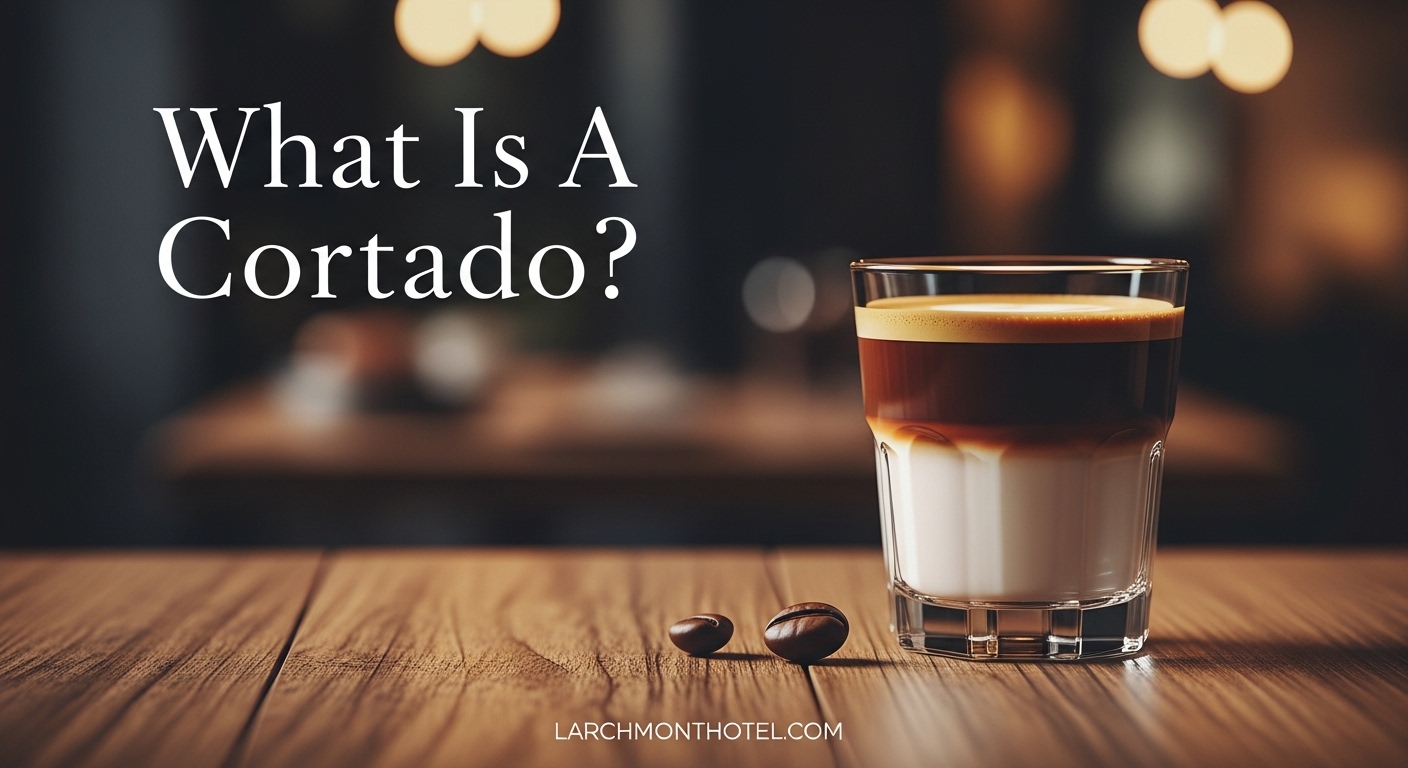
A cortado is a Spanish coffee drink made with equal parts espresso and steamed milk, creating a perfectly balanced beverage that lets the espresso’s flavor shine while the milk smooths the intensity. The 1:1 ratio is the defining characteristic that sets this drink apart from other espresso-based beverages.
The cortado has gained popularity worldwide as coffee enthusiasts seek drinks that highlight espresso quality without overwhelming it with milk. Unlike larger milk drinks, the cortado maintains the coffee’s character while providing a creamy, approachable experience.
In this guide, you’ll learn exactly what makes a cortado unique, how to make one at home, and how it compares to similar espresso drinks you might know.
The word cortado comes from the Spanish verb cortar, which means to cut. In coffee terms, the milk cuts through the intense espresso, creating a balanced drink where neither component overpowers the other.
This name perfectly captures what happens when you combine equal parts espresso and warm steamed milk. The milk cuts the bitterness and acidity of the espresso without masking its flavor profile.
Spanish coffee culture has perfected this balance over generations. The cortado represents a philosophy of harmony rather than domination of one ingredient over another.
A cortado uses exactly one part espresso to one part steamed milk. This ratio is non-negotiable for an authentic cortado. Most preparations use a double shot of espresso (about 2 ounces) with an equal amount of steamed milk.
The milk in a cortado is steamed but not frothy. Unlike cappuccinos with their thick foam layer, cortado milk has minimal microfoam just enough to add a silky texture without creating a distinct foam cap.
This careful balance means the cortado delivers a strong espresso experience with softened edges. You taste the coffee’s nuanced flavors, but without the harsh bite that straight espresso can have.
The Key Difference: Unlike lattes and cappuccinos where ratios vary widely, a cortado’s 1:1 espresso-to-milk ratio is its defining feature and never changes.
The cortado originated in Spain’s Basque Country, with its popularity spreading throughout the Iberian Peninsula and eventually to Latin America. Spanish coffee culture has always valued espresso quality, and the cortado emerged as the perfect mid-morning drink.
In Spain and Portugal, you’ll find this drink in virtually any cafe. It’s traditionally served in a small glass, allowing you to appreciate the beautiful layering of espresso and milk.
The drink gained international recognition as specialty coffee culture expanded globally. Baristas loved how the cortado format let high-quality espresso beans showcase their best characteristics.
Traditional cortado glasses are small, typically holding 4-6 ounces total. These glasses are often made of clear glass to showcase the drink’s beautiful two-tone appearance the dark espresso below and the lighter milk above.
The glass size matters because it reinforces the cortado’s identity as a small, intense drink. It’s not meant to be sipped slowly over an hour like a large latte. A cortado is consumed in 5-10 minutes, enjoyed as a concentrated coffee break.
Many specialty coffee shops now use Gibraltar glasses, named after the glassware originally manufactured by Libbey. These 4.5-ounce glasses have become standard cortado vessels in modern cafes.
Making a cortado at home requires some practice, but the reward is a perfectly balanced coffee drink that rivals what you’ll find in specialty cafes.
Pro Tip: If you don’t have an espresso machine, use a Moka pot to make strong coffee. While not true espresso, it creates a concentrated base that works reasonably well for cortados.
Understanding how a cortado compares to other espresso drinks helps you order confidently and appreciate each drink’s unique qualities.
| Drink | Espresso | Milk | Foam | Total Size | Ratio |
|---|---|---|---|---|---|
| Cortado | 2 oz (double shot) | 2 oz steamed | Minimal | 4 oz | 1:1 |
| Latte | 1-2 oz | 8-10 oz steamed | Thin layer | 10-12 oz | 1:4 to 1:6 |
| Cappuccino | 2 oz | 2 oz steamed | 2 oz frothed | 6 oz | 1:1:1 |
| Flat White | 2 oz | 4-5 oz velvety | Integrated | 5-6 oz | 1:2 to 1:2.5 |
| Macchiato | 2 oz | 0.5 oz dollop | None | 2.5 oz | 4:1 |
A cortado is a smaller, more intense drink than a latte. The cortado’s 1:1 ratio means you taste the espresso prominently, while a latte’s 1:4 to 1:6 ratio makes milk the dominant flavor.
Lattes are larger drinks meant for extended sipping. A typical latte is 10-12 ounces, compared to a cortado’s 4-ounce serving size. If you want a milky, dessert-like coffee experience, order a latte. If you want to taste the coffee’s character with some smoothness from milk, choose a cortado.
The milk texture also differs. Latte milk has very light foam just a thin layer on top. Cortado milk is steamed for texture without distinct foam separation.
While both drinks start with equal parts espresso and milk, the cappuccino adds a significant foam layer. Traditional cappuccinos follow a 1:1:1 ratio: one part espresso, one part steamed milk, one part frothed milk foam.
This foam layer changes the drinking experience entirely. Cappuccinos offer that iconic cloud-like foam cap, while cortados have a uniform silky texture throughout. When you drink a cappuccino, you get distinct layers. When you drink a cortado, every sip tastes the same.
Cappuccinos are also larger (typically 6 ounces) and have a more dramatic presentation. Cortados are more understated, focusing on flavor harmony rather than visual theatrics.
The flat white, originating from Australia/New Zealand, is perhaps the cortado’s closest cousin. Both drinks emphasize espresso quality with minimal foam. However, the flat white typically uses more milk (1:2 ratio) and features velvety microfoam integrated throughout.
Flat whites are usually 5-6 ounces, making them slightly larger than cortados. The microfoam in a flat white is more developed creating that signature velvety texture that Australian and New Zealand cafe culture perfected.
In practice, the line between cortado and flat white often blurs. Many cafes use the terms interchangeably or make only subtle distinctions. If you’re unsure what you’re getting, ask your barista about their specific ratios.
A traditional espresso macchiato is the smallest of these drinks just a shot of espresso marked with a small dollop of foamed milk. The word macchiato means stained or marked in Italian, referring to how the milk marks the espresso.
The ratio in a macchiato is roughly 4:1 in favor of espresso. It’s essentially straight espresso with just a hint of milk to soften the very edge of the flavor. A cortado provides significantly more milk balance.
Be careful not to confuse the traditional macchiato with commercial chain creations that are essentially lattes with flavoring. A true macchiato is a tiny, intense coffee experience.
The cortado concept exists in various forms across coffee-drinking cultures worldwide. Each region has put its own spin on the espresso-plus-milk formula.
In Cuba, the cortadito adds sweetened condensed milk to the mix, creating a dessert-like variation. Portugal’s pingado is essentially a cortado by another name. The Gibraltar, popularized in San Francisco coffee shops, is simply a cortado served in a specific Libbey glass.
These variations share the same philosophy: balance espresso intensity with milk smoothness. The specifics may change, but the goal remains creating harmony between strong coffee and creamy dairy.
Yes, a cortado is stronger than a latte because it contains less milk relative to espresso. The cortado’s 1:1 ratio means the espresso’s flavor and caffeine remain prominent. A latte’s higher milk content dilutes both flavor and caffeine intensity.
The main difference is the milk ratio and texture. A cortado uses a strict 1:1 ratio with minimal foam. A flat white typically has more milk (1:2 ratio) and features velvety microfoam integrated throughout. Flat whites are also slightly larger, usually 5-6 ounces versus the cortado’s 4 ounces.
A cortado contains exactly 2 ounces of steamed milk to match 2 ounces of espresso (a double shot). This 1:1 ratio is fixed and defines what makes a cortado authentic. The milk is steamed to create smooth microfoam but not frothed into a thick layer.
Cortado comes from the Spanish word cortar, meaning to cut. The milk cuts through the espresso’s intensity, creating a balanced drink where the coffee’s flavors shine without harsh bitterness. It represents perfect harmony between strong espresso and smooth milk.
A traditional cortado is served hot with freshly steamed milk. However, you can order an iced cortado, which combines espresso with cold milk over ice. The 1:1 ratio remains the same, though the texture and drinking experience differ significantly from the traditional hot version.
A traditional cortado glass holds 4-6 ounces total. Most standard cortado servings are 4 ounces (2 ounces espresso plus 2 ounces milk). The glasses are typically clear to showcase the drink’s appearance. Many cafes use Gibraltar glasses, which are 4.5-ounce tumblers that have become the cortado standard in specialty coffee.
The cortado represents coffee at its most balanced an elegant harmony where espresso and milk complement rather than compete. Whether you’re ordering at a specialty cafe or crafting one at home, understanding this drink’s 1:1 ratio and Spanish origins helps you appreciate what makes it special.
As you explore espresso drinks, the cortado serves as an excellent bridge for those who find straight espresso too intense but want more coffee flavor than milky drinks provide. It’s a drink that respects the coffee while remaining approachable.
Try making a cortado at home to develop your palate. The practice of steaming milk to the perfect texture and achieving that ideal ratio will improve all your coffee-making skills. Your morning routine might just find its new favorite format.